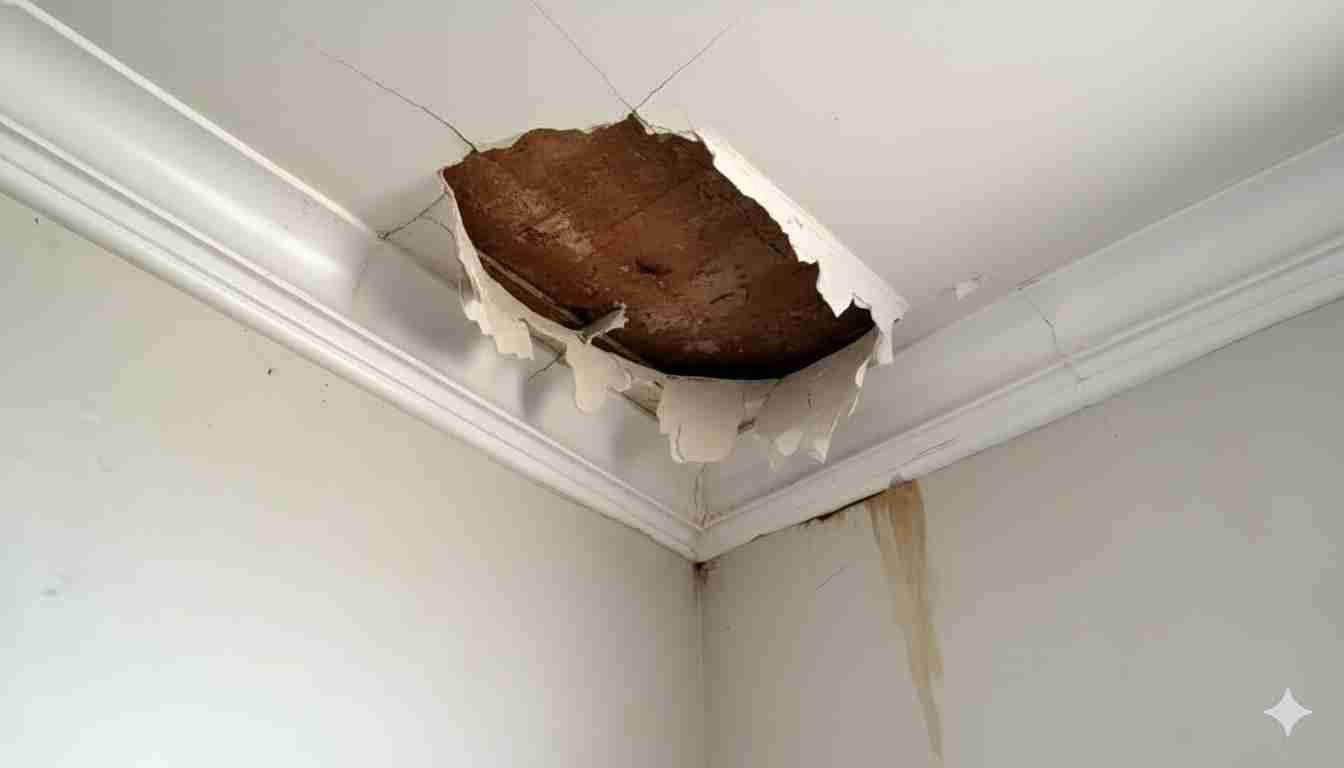

How to Spot Roof Damage Before It Leads to Leaks
Your roof works hard every day, taking on wind, rain, sun, and everything in between. Most of the time it does its job quietly, without any issues… until one small problem finally shows itself as a stain on the ceiling or a drip during a storm. By then, the damage has already spread.
The easiest way to avoid costly repairs is simple: catch roof damage early. Here’s how to recognize what’s going on up there long before it turns into a leak.
What Roof Damage Looks Like
Most people picture roof damage as missing shingles or gaping holes, but it usually shows up in far more subtle ways. Once you know what to look for, the roof tells its own story. Below are the most common types of damage and how they actually appear on a typical home.
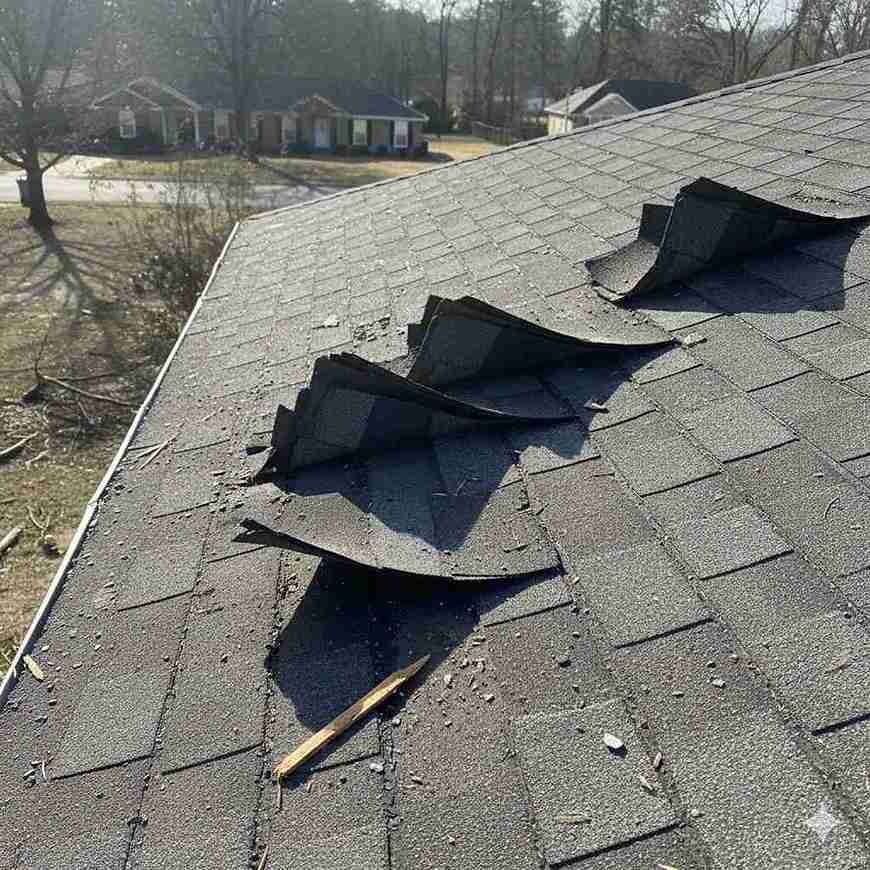
Wind-Damaged Shingles: Creases, Lifts, and Loose Edges
Wind doesn’t have to tear shingles off to cause trouble. More often, it bends them back just enough to break the seal beneath.
What this looks like:
- A faint crease line across the shingle
- Edges slightly lifted or curled
- Corners that look bent
- Shingles that move when the wind blows
The shingle may still be attached, but water can slide underneath during the next storm.
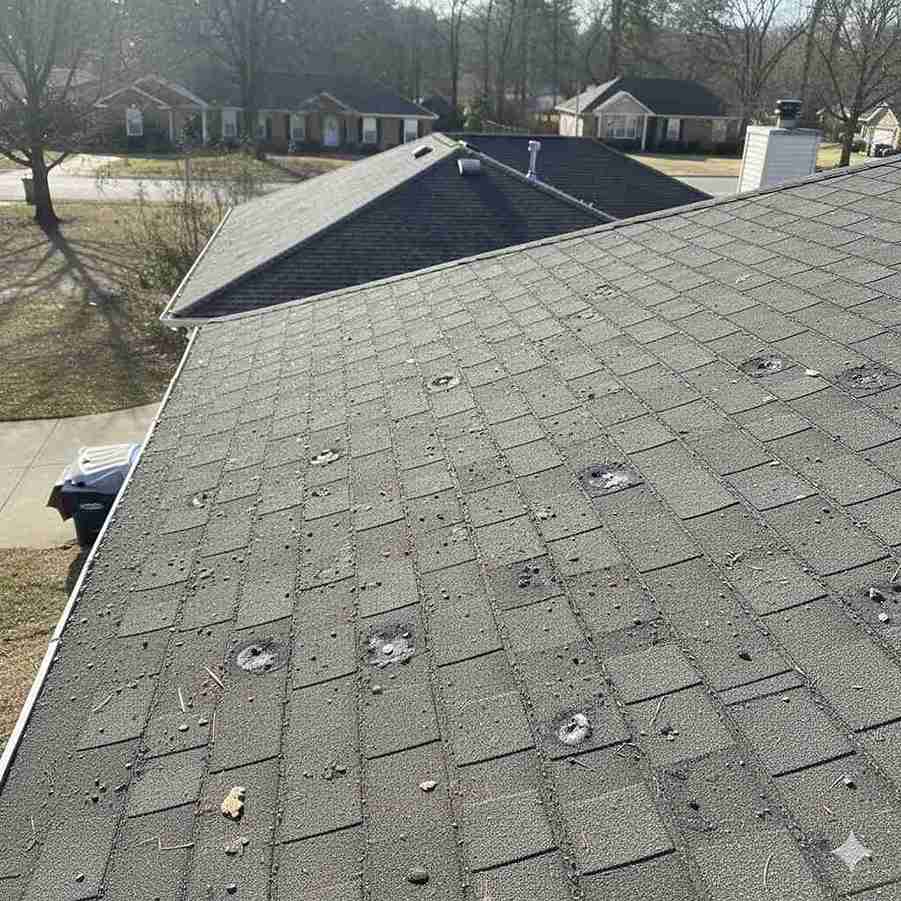
Hail Damage: Bruises, Dents, and Granule Loss
Hail impacts usually leave soft bruises you can feel more easily than you can see.
What this looks like:
- Bald or dark circles where granules popped off
- Spots that appear “dented” or scuffed
- Tiny metal dings on gutters, roof vents, or flashing
- Soft places under the shingle surface (felt during inspection)
These bruised areas age quickly in the sun and can turn into leaks over time.
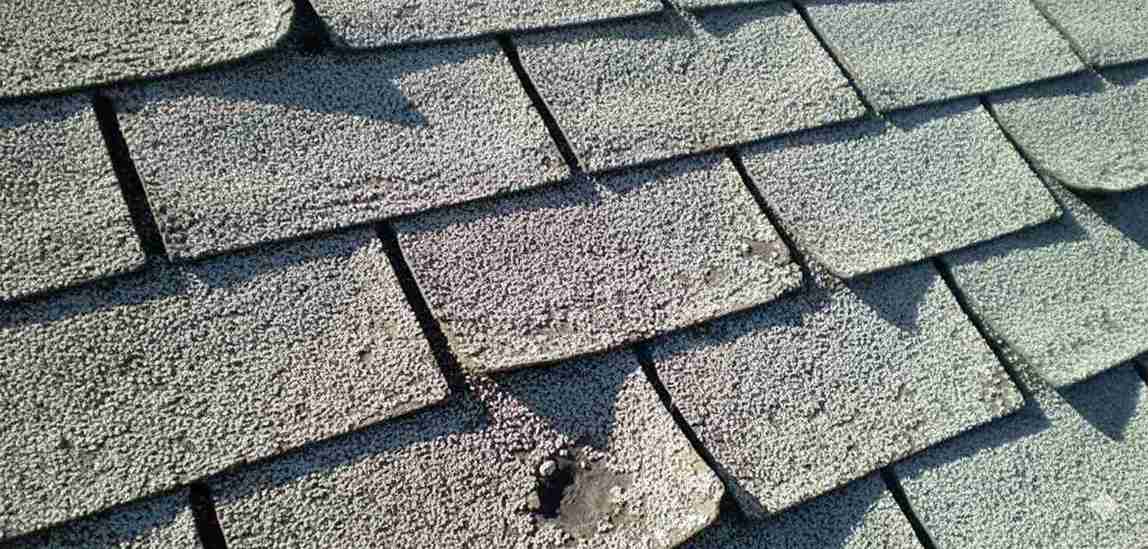
Sun and Heat Damage: Drying, Fading, and Curling
Strong sun slowly bakes the oils out of shingles.
What this looks like:
- Edges curling upward
- A dry, cracked surface
- Shingles turning brittle or

Moisture Damage: Dark Spots and Soft Decking
Moisture problems can stay hidden for a long time before they show up inside your home.
What this looks like:
- Persistent dark stains on shingles
- Areas that appear uneven or slightly sunken
- Moss or algae growing in shaded sections
- Decking that feels soft (during professional inspection)
Moisture is one of the leading causes of long-term structural issues if not caught early.
Flashing Damage: Gaps and Rusted Metal
Flashing protects the vulnerable areas of your roof, and when it fails, leaks often follow.
What this looks like:
- Metal that has started to separate from the chimney, wall, or vent
- Cracked sealant or missing caulking
- Rust forming around nail heads
- Bent or lifted metal edges
Even a tiny opening is enough for water to slip through.
Aging Shingles: Warping, Wear, and General Breakdown
As shingles age, they lose flexibility and protective coating.
What this looks like:
- A wavy or uneven roof surface
- Granules collecting in gutters or on the driveway
- Shingles cracking or breaking when lifted
- Faded or “washed out” color
This is natural wear, but it still allows water in just like storm damage would.
Structural Damage: Sagging or Dipping Rooflines
Your roofline should look straight all the way across.
What this looks like:
- A gentle dip in one area
- A valley that seems deeper than the others
- A visible “wave” along the length of the roof
Sagging almost always indicates long-term moisture under the decking or inadequate framing support.
Check These Early Warning Signs Around Your Home
Understanding what damage looks like is one part of the puzzle. The other is knowing where it shows up first.
1. Visible Shingle Problems
After storms, take a look from ground level. If shingles look cracked, curled, or missing, water may already have a path inside.
Safety tip: use binoculars or photos instead of climbing on the roof.
2. Granules in the Gutters
If you notice sand-like granules in your gutters or washed onto your driveway, it’s usually a sign your shingles are wearing down.
3. Flashing Issues Around Chimneys and Vents
Loose flashing can cause slow leaks that aren’t obvious right away. Look for rust, gaps, or lifted edges.
4. Early Signs in the Attic
Your attic often shows the first evidence of a leak. Be on the lookout for:
- Rays of light coming through roof boards
- Damp insulation
- Dark streaks on the wood
- A musty smell
These clues often appear long before water reaches the living space.
5. Sagging or Uneven Roof Areas
If your roofline looks wavy or slightly dipped, the decking underneath could be compromised.
6. Interior Warning Signs
Roof problems sometimes show up inside your home first. Common signs include:
- Water stains on ceilings
- Peeling paint near the ceiling line
- Bubbling drywall
- Damp or musty odors
Once water reaches the interior, the damage is already advanced.
Why Early Detection Matters
Roof problems rarely stay small. When unnoticed, they lead to leaks, mold, insulation damage, and long-term structural issues. Finding problems early keeps repair costs low and protects the life of your roof.
Strong winds, hail, and seasonal storms can loosen shingles and flashing without any immediate indoor signs. A quick look after major weather events helps prevent hidden damage from spreading.
Early action almost always means faster repairs, fewer surprises, and a safer, healthier home.
Get a Professional Roof Inspection
DIY checks are helpful, but a professional roofer can spot subtle warning signs most homeowners misslifted shingle edges, soft decking, hail bruises, and small gaps in the flashing.
At Priority Roofing, we offer detailed, no-obligation inspections and explain every finding clearly. No pressure, no upselling just honest insights to keep your home protected.
If you’ve noticed any signs of roof damage or a recent storm has you concerned, now is the perfect time to get a professional opinion.
Schedule Your Priority Roofing Inspection